




MENU
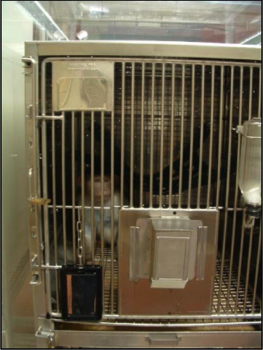
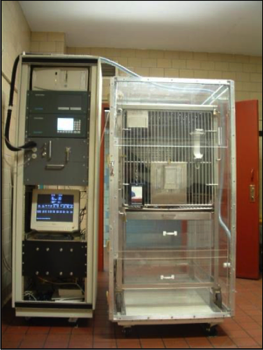
(2005): I developed this monkey indirect calorimeter at the State University of New York-Downstate. I designed a special metabolic cage to provide comfort for the monkeys while providing maximum air circulation without the utilization of internal fans. Hartman & Braun Optima Series analyzers were utilized for metabolic measurements.
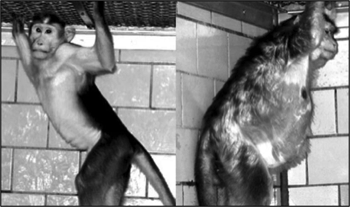
Bonnet Macaque monkeys are utilized as a human model for determining the causes of obesity. This necessitated the development of the first monkey whole room indirect calorimeter for accurate metabolic measurements in 2005.
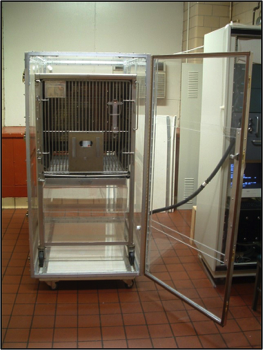
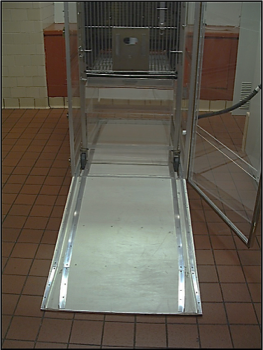
Monkeys were transferred into this specialty designed metabolic cage in another room and then brought into the room calorimeter lab to be placed within the monkey indirect calorimeter chamber (left) by just rolling it up the ramp (right).
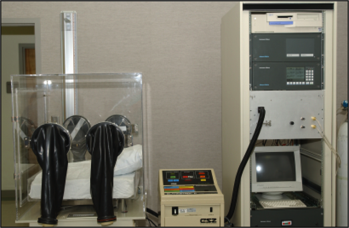
(2000): Updated infant whole room indirect calorimeter I developed at Miami Children’s Hospital, Department of Research. Climate control was provided by a hospital blanket cooler (center). Hartman & Braun upgraded instrumentation was utilized (right). Notice the gloveless interaction ports to provide more natural parental/care giver interaction with infants during metabolic measurements (left).
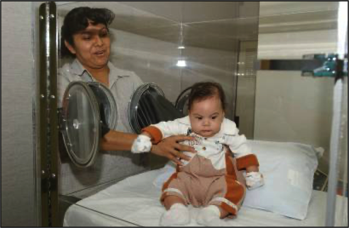
Parental/care giver interaction during metabolic measurements utilizing the new gloveless access ports in the upgraded infant indirect calorimeter. Greater natural contact between infants and their parents/care givers further reduces anxiety due to separation, thus improving the accuracy of metabolic measurements.
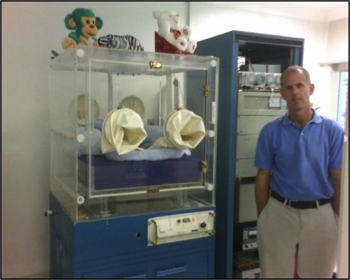
(1996): I developed the worlds first practical whole room indirect calorimeter at Maimonides Medical Center, Department of Pediatrics in 1996. This measured all the components of energy expenditure including physical activity. Notice the gloves that allowed interaction with the infants by parents/care givers during metabolic measurements and the balance below the bed platform for measurement of infant physical activity.

Example of parental/caregiver interaction during infant metabolic measurements utilizing the first ever infant whole room indirect calorimeter. This was the first attempt to reduce infant anxiety due to separation from parents/care givers.
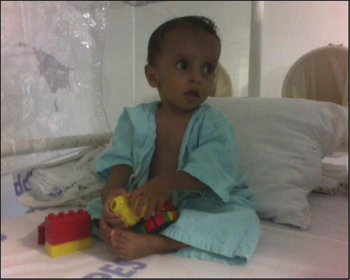
This two-year old child weighs just 4 kg and is an example of the growing problem of childhood primary/secondary malnutrition in many countries of the world. In 2003 I set up an infant whole room indirect calorimeter within the pediatric department at he Federal University of Bahia, Salvador, Brazil for measurement of all the components of energy expenditure in malnourished infants and children. This enabled much improved nutritional rehabilitation which led to faster recoveries.
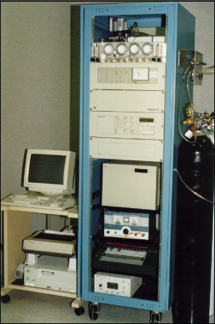
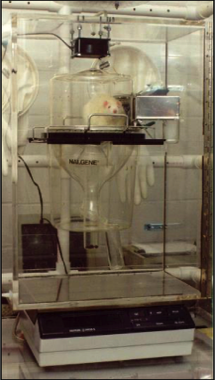
(1994): Rodent indirect calorimeter I developed at Maimonides Medical Center, Department of Pediatrics, featuring a chamber whereby a rodent metabolic cage could be inserted. The entire enclosure rests on top of a balance to measure physical activity. Utilizing the metabolic cage enabled measurement of all the components of rodent energy expenditure. Rodents up to 500 grams could be placed within the internal metabolic cage.
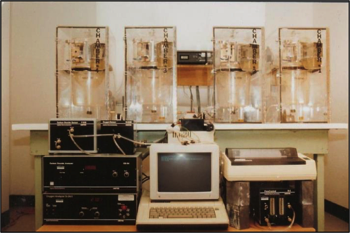
(1985): First rodent multi-chamber indirect calorimeter I developed at the University of Arizona, Department of Nutrition in 1985. The system utilized Ametek analyzers and an Apple 2e computer. Notice the inserted Nalgene rodent metabolic cages thus allowing measurement of all the components of rodent energy expenditure in up to four rodents simultaneously.
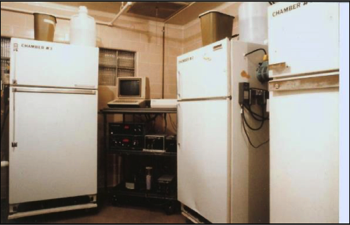
(1983): I developed the first indirect calorimeter for poultry at the University of Arizona, Department of Nutrition, in 1983. It featured multiple chambers that housed two laying hens each. Used refrigerators were utilized since they already had a cooling system. Furthermore, they allowed development of the system at greatly reduced costs. The system utilized Ametek analyzers and an Apple 2e computer.
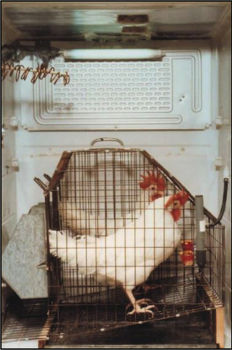
Inside of the poultry indirect calorimeter chamber. Each chamber housed two laying hens.

D & S Consulting Services
244 Madison Ave #8J
New York, NY 10016
USA

About
Portfolio
Media
Publications
Testimonials
Work History
Contact


